Pakistan Currency & Historical Banknotes
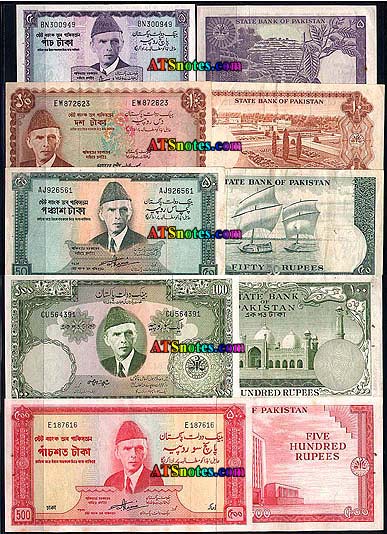

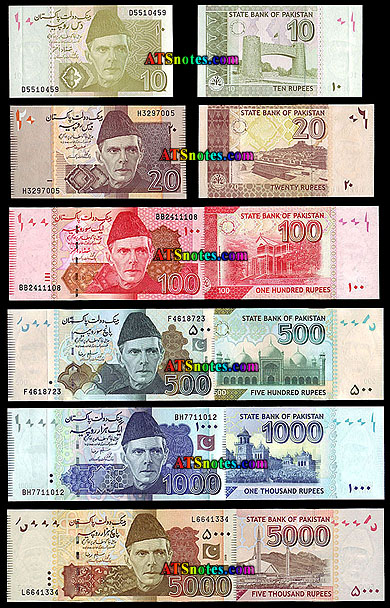

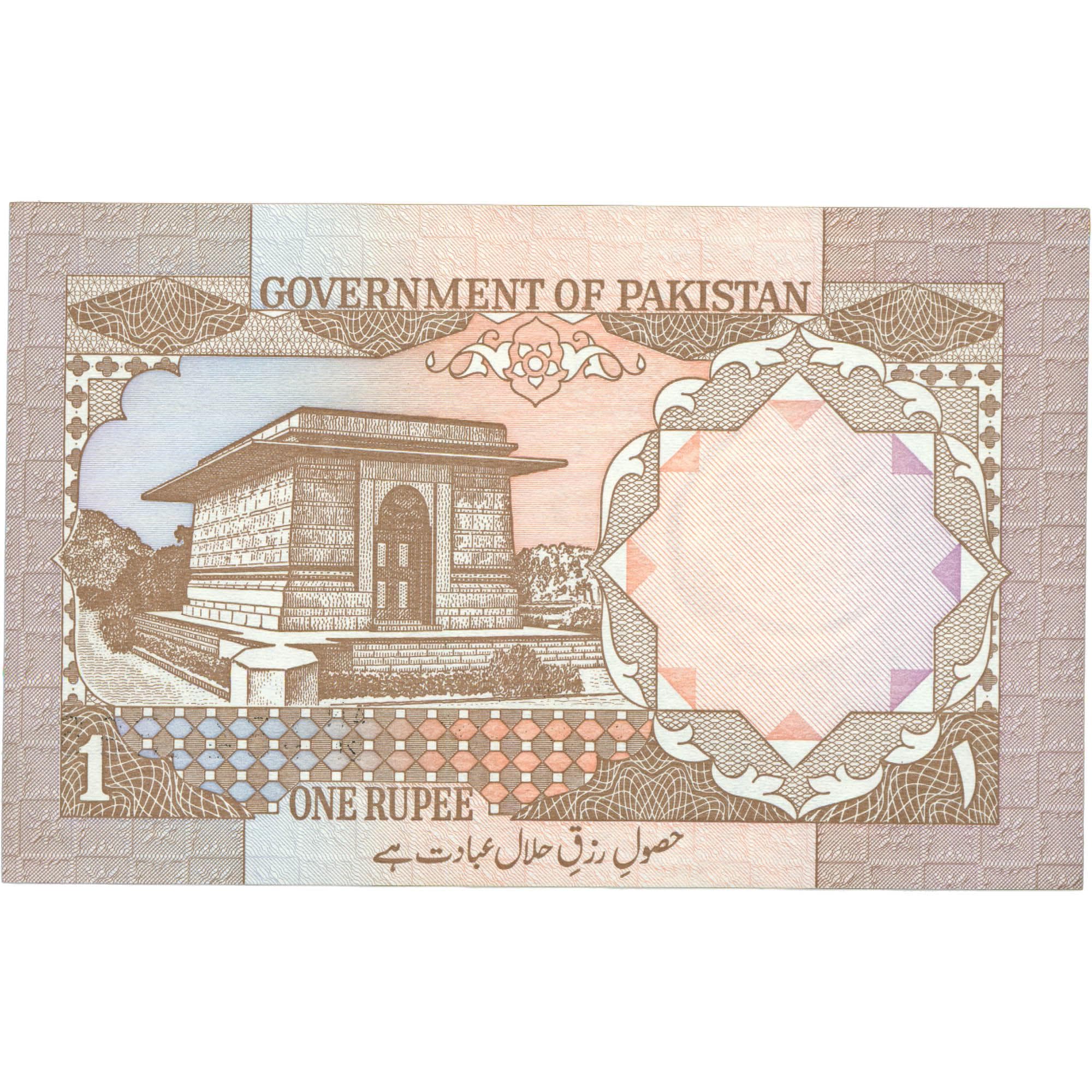
Pakistan Currency & Historical Banknotes — Examples of old and modern Pakistani rupee notes, showing how the nation’s money has looked since independence.
Pakistan Currency Value from 1947 — USD to PKR Historical Overview
When Pakistan became an independent country in 1947, its economy was nascent and the Pakistani Rupee (PKR) was just being established. At that time, 1 US Dollar (USD) was worth only about ₹3.31 Pakistani Rupees — a reflection of a relatively stable, fixed economic system where the rupee was initially pegged to the British pound.
Over the decades, due to policy changes, inflation, global economic pressures, and internal fiscal challenges, the value of the rupee has depreciated significantly against the US dollar. Here’s a short historical snapshot of that journey:
📅 Historical USD → PKR Exchange Rates
| Year | 1 USD ≈ PKR | Context |
|---|---|---|
| 1947 | ~3.31 | Pakistan’s independence; rupee pegged to British Pound. (peergroup.com.pk) |
| 1955–1960 | ~4.76 | Early devaluation to support economic policy. (ultrasolar.pk) |
| 1970s | ~9.90 | After separation of East Pakistan and shift to a more flexible rate. (ultrasolar.pk) |
| 1980s | ~9.99 | Transition to a managed float system. (ultrasolar.pk) |
| 1990 | ~21.71 | Economic reforms and liberalization era. (ultrasolar.pk) |
| 2000 | ~51.90 | Increasing market pressures. (ultrasolar.pk) |
| 2010 | ~85.50 | Continued depreciation due to inflation and deficits. (ultrasolar.pk) |
| 2020 | ~160.50 | Global shifts + domestic challenges. (ultrasolar.pk) |
| 2024 | ~280+ | Steep fall in PKR value vs dollar. (peergroup.com.pk) |
| 2025 | ~275–290 | Continued fluctuation amid economic pressures. (alrazihospital.com.pk) |
🔍 Key takeaway: In roughly 78 years, the PKR has gone from ₹3.31 per dollar to around ₹280-₹290 per dollar, illustrating how inflation, foreign debt, trade imbalances, and currency policy shaped its long-term depreciation. (alrazihospital.com.pk)
📌 Why Did the PKR Weaken Over Time?
Here are some core reasons behind this long-term trend:
🪙 1. Fixed to Floating Currency Policies
After independence, Pakistan’s currency was fixed to the British pound, keeping the rupee stable.
Over time, it shifted to a managed float, allowing market forces (supply and demand) to push the rupee down. (ultrasolar.pk)
📈 2. Inflation & Economic Growth
Long-term inflation erodes purchasing power — cost of living rose, and PKR’s strength fell. (peergroup.com.pk)
🌍 3. Global & Domestic Challenges
Wars, political instability, and fiscal deficits made imports costlier and forced more reliance on foreign currency. (alrazihospital.com.pk)
📉 4. External Debt and Loans
Borrowing in foreign currency, especially USD, increased pressure on cash reserves and weakens the domestic currency. (alrazihospital.com.pk)
📌 Understanding Exchange Rate Impact
Low historical rates (like 3.31 PKR per USD) meant the rupee had strong purchasing power.
Higher modern rates (280+ PKR per USD) indicate the rupee buys less foreign currency — digital remittances, imports, travel, and foreign debt servicing become more expensive.
💡 Note on Currency Visuals
The images at the top show Pakistani banknotes from different eras — from early notes right after independence to more recent designs. Collectors and historians value older notes, such as the early rupee denominations and commemorative issues.
📊 Summary
| Era | Exchange Trend |
|---|---|
| 1947-1960s | Stable, low USD to PKR |
| 1970s-1980s | Managed float & policy shifts |
| 1990s | Liberalization pressures |
| 2000s-2025 | Steady devaluation due to structural factors |
This overview gives a clear historical progression — valuable for understanding Pakistan’s economic journey through currency value over time.
If you’d like, I can also generate diagrams or a visual chart showing the USD→PKR progression year by year.


Comments
Post a Comment
if you have any issue let me know plz